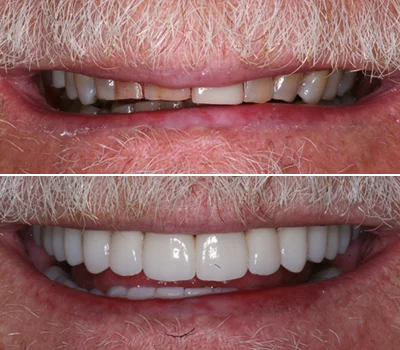
Living With a Gap in Your Smile
Recognizing yourself here is the first step. A complete, comfortable smile is closer than you think.
What Waiting Really Costs You
Teeth start shifting
Nearby teeth drift into the gap, changing your bite and alignment over time.
Bone begins to weaken
The jaw beneath a missing tooth loses density without stimulation from chewing.
Treatment grows complex
A simple gap today can require added procedures if left unaddressed.
Chewing gets harder
Eating becomes uncomfortable as your remaining teeth take on extra strain.
Confidence keeps fading
Self-consciousness deepens the longer a visible gap stays untreated.
Costs climb higher
Delayed care often means more involved treatment and greater expense later.
Acting sooner means a simpler path and a stronger, healthier smile.
How Dental Bridges Restore Your Smile
A dental bridge (a replacement for missing teeth) closes the gap left by one or more lost teeth. It works by anchoring a set of natural-looking replacement teeth to the healthy teeth on either side of the space, or in some cases to implants. The result is a stable, seamless restoration that blends with your surrounding teeth and brings back full chewing and speaking function.
At Chattanooga Dental Studio, we plan every bridge with precision using advanced imaging like Cone Beam 3D technology, which lets us map your bite and design a custom fit that feels right from day one. Patients seeking dental bridges in Chattanooga benefit from careful planning that prioritizes both comfort and natural results, so your restoration looks like it belongs.
Transformations That Last
Watch real patients share how their dental journey restored not just their smiles, but their quality of life. These personal stories capture the relief and joy that come with comprehensive, caring treatment.
Brenda
Tina
Be our Next Success Story!
Benefits of Dental Bridges
See What's Possible for Your Smile
Be our Next Success Story!
Are Dental Bridges Right for You?
Not Sure Where You Stand?
What to Expect With Your Dental Bridge
Consultation and Planning
Your first visit begins with a friendly conversation about your goals and a careful look at your oral health. Using advanced imaging like Cone Beam 3D technology, we assess the teeth surrounding the gap and map out a precise plan. You'll leave understanding exactly what your treatment involves and feeling confident about the path ahead.
Preparing Your Teeth
During your next visit, we gently prepare the teeth on either side of the gap to support your new bridge. Thanks to tools like wand anesthesia and intraoral cameras, the process stays comfortable and stress-free. We then take impressions to create a custom-fit restoration that matches your natural smile, and you'll receive a temporary bridge to wear in the meantime.
Placing Your Bridge
When your custom bridge is ready, we carefully position and adjust it for a perfect, natural fit. We check your bite to make sure everything feels smooth and comfortable before securing it in place. You'll leave with a complete smile and simple guidance on caring for your new bridge at home.
Ready to Complete Your Smile?
Healing After Your Dental Bridge
First 24-48 Hours
You may notice mild sensitivity around the treated teeth as your mouth adjusts to the new bridge. Stick to softer foods and chew gently during this short window. Most patients find any tenderness fades quickly and everyday activities continue without interruption.
First Week
As the days pass, your bridge will start to feel like a natural part of your smile. You can gradually return to your usual foods and routines while keeping the area clean with gentle brushing and flossing. Most patients are fully comfortable and back to normal well within this time.
Questions About Recovery? We're here to help.
Flexible Payment Plans for Your Smile
Don't Wait to Smile. Check out Our Payment Options.
Common Dental Bridge Questions
How long do dental bridges last?
Is getting a bridge painful?
How many visits will I need?
Will my bridge look natural?
How do I care for a dental bridge?
Can I eat normally with a bridge?
Why should I replace a missing tooth?

What is a bridge made of?

Am I a good candidate for a bridge?
How is a bridge different from a partial denture?
Still Have Questions?